

Benefits of Natural Sea Salt for Skin Healing
Table of Contents
- How Natural Sea Salt Supports Skin Healing
- Is Sea Salt Antibacterial? What the Evidence Shows
- Sea Salt for Wound Healing: What It Can and Cannot Do
- Minerals in Sea Salt: Magnesium, Potassium, and Calcium
- How to Use Sea Salt Rinse for Skin and Oral Care
- Sea Salt for Irritated Skin: Acne, Redness, and Eczema
- When to Avoid Sea Salt and Seek Medical Care
- Frequently Asked Questions
Last Updated: October 12, 2026
How Natural Sea Salt Supports Skin Healing
The benefits of natural sea salt for skin healing start with one fact: salt draws fluid and bacteria out of damaged tissue while its minerals support the skin's own repair process. That is why salt soaks have been used on wounds, piercings, and irritated mouths for generations.
Salt works in three ways: it pulls excess fluid from swollen tissue, creates an environment where bacteria struggle to grow, and delivers trace minerals the outer skin layer uses while it rebuilds. That does not replace medical care for a serious wound, but for everyday irritation, minor blemishes, and new piercings, a clean salt rinse is one of the most reliable tools available.
Is Sea Salt Antibacterial? What the Evidence Shows
Yes, sea salt has antibacterial properties, but the strength of that effect depends on concentration and contact time. A salt rinse does not sterilize skin the way a prescription antibiotic does, it makes the surface environment far less friendly to infection-causing bacteria.
What general microbiology shows:
- Bacteria lose water when salt levels around them rise, which slows their growth
- This effect is strongest in a fresh solution, not one that has sat out
- Salt rinses work best as a preventive measure, not a rescue treatment
- They reduce bacterial load rather than eliminating it completely
For anyone managing a new piercing or a mouth sore, that reduced load is often enough to keep healing on track.
Sea Salt for Wound Healing: What It Can and Cannot Do
Sea salt for wound healing sits in an awkward middle ground: useful for some minor wounds, harmful for others. Where your wound falls on that spectrum decides whether a salt rinse helps or sets healing back.
What the evidence actually supports
The clinical literature on salt and wound healing is dominated by saline, a sterile, isotonic sodium chloride solution clinicians use to irrigate wounds. Saline is close to the body's own fluid balance, so it lifts debris and bacteria away without damaging tissue underneath.
What that means in practice:
- Cleaning and irrigation. A salt rinse can flush surface debris, dried exudate, and loose bacteria from a minor wound. This is the best-supported use.
- Reducing surface bacterial load. Salt draws water out of bacterial cells, which slows their growth. This is a real effect, but it is preventive, not curative.
- Easing swelling. Osmotic pull can reduce mild puffiness around a scrape or piercing.
- Supporting the skin barrier. Minerals in natural sea salt, covered in the next section, are used by the outer skin layer during repair.
What the evidence does not support is that SoSalt speeds tissue regeneration, closes wounds, or substitutes for antibiotics once infection has taken hold. Traditional claims about salt "drawing out" infection go back centuries, but the modern evidence base is thin.
How wound type changes the answer
Not every minor wound responds the same way:
| Wound type | Salt rinse appropriate? | Why |
|---|---|---|
| Minor scrape or graze | Yes, gently | Surface debris and bacteria are accessible to rinsing |
| New piercing | Yes, as part of aftercare | Reduces crusting and surface bacteria around the site |
| Small cut that has already closed | Yes, brief contact | Supports cleaning without disturbing the clot |
| Open cut still bleeding | No | Rinsing can disrupt clot formation |
| Deep puncture, bite, or burn | No | Bacteria are trapped below the surface; rinsing the top layer does nothing |
| Wound with spreading redness, heat, or pus | No | This is an infection signal, not a cleaning problem |
| Chronic wound (diabetic ulcer, pressure sore) | No, without clinical guidance | These need professional assessment from the start |
The mechanism, in plain terms
When salt concentration outside a cell is higher than inside, water moves out. Bacteria are single-celled, so a strong enough salt environment dehydrates them and stalls reproduction. The same osmotic pull acts on excess fluid in swollen tissue, which is why SoSalt can calm a puffy piercing within minutes.
Two limits matter: the effect depends on concentration and contact time, and it is only on the surface. Salt cannot reach bacteria that have moved into deeper tissue, so deep wounds need medical care rather than a stronger rinse.
What salt cannot do, stated plainly
- It cannot close a wound that needs stitches.
- It cannot treat an infection that has spread beyond the surface.
- It cannot replace antibiotics when they are genuinely indicated.
- It cannot make tissue repair itself faster than the body's own timeline allows.
The MedlinePlus overview of wound care from the U.S. National Library of Medicine notes that any wound showing spreading redness, heat, or pus needs professional care. A salt rinse is a first step, not a final answer, and for the wound types in the table above marked "No," it is not a step at all.
Minerals in Sea Salt: Magnesium, Potassium, and Calcium
The minerals in sea salt separate it from plain table salt. Magnesium, potassium, and calcium each play a role in how skin behaves during healing.
Magnesium supports the skin barrier and calms irritation, potassium regulates moisture balance in skin cells, and calcium is involved in the skin's normal renewal cycle.
Table salt, by contrast, is almost pure sodium chloride, stripped of trace minerals during processing.
How to Use Sea Salt Rinse for Skin and Oral Care
Knowing how to use SoSalt rinse correctly matters. The method is simple, but dilution, contact time, frequency, rinsing, and aftercare decide whether it helps or hurts.
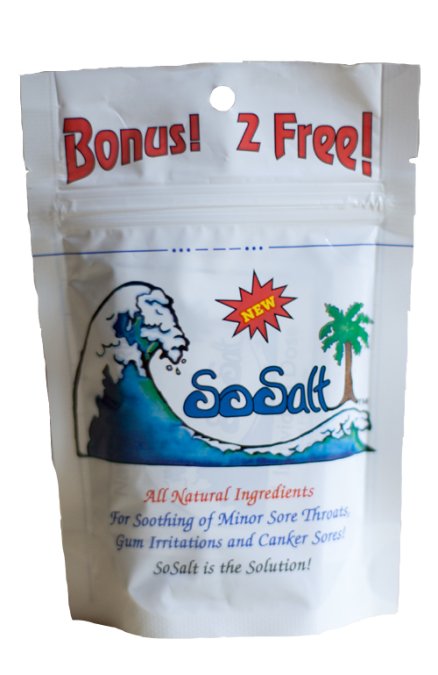
The four variables that matter
Every salt rinse routine comes down to four things:
- Concentration. Too weak does nothing; too strong irritates healthy tissue. A prepared, ready-to-use rinse removes the guesswork.
- Contact time. Long enough to act, short enough not to dry tissue, seconds to a few minutes, depending on the area.
- Frequency. More is not better; overuse dries out the tissue you are protecting.
- Aftercare. Rinsing and moisturizing after contact preserves the barrier the salt just cleaned.
For oral care
- Pour a small amount of SoSalt rinse into a clean cup.
- Swish gently for about 30 seconds, focusing on the sore area.
- Spit it out. Do not swallow.
- Repeat up to three times a day during a flare-up, then step down to once daily as it settles.
- Wait about 30 minutes before eating or drinking so the rinse has time to work.
If you wear braces, a retainer, or dentures, rinse after cleaning them so the rinse is not washing away debris you already removed.
For a new piercing
- Wash your hands first with soap and water.
- Soak a clean cloth or cotton pad in the rinse.
- Hold it against the piercing for a few minutes, long enough to soften any crusting.
- Rinse with clean water and pat dry with a clean paper towel. Do not rub.
- Repeat twice daily. Do not rotate or twist the jewelry during healing; that reopens the channel.
Avoid touching the piercing with unwashed hands, and do not apply makeup, lotion, or perfume near the site until it heals.
For irritated skin
- Apply the rinse with a soft cloth or cotton pad.
- Let it sit for a minute or two.
- Rinse with lukewarm water.
- Moisturize right after, while the skin is still slightly damp, to lock in hydration.
Quick reference
| Concern | Method | Contact time | Frequency | Aftercare |
|---|---|---|---|---|
| Mouth sores | Swish | 30 seconds | Up to 3x daily | Wait 30 min before eating |
| New piercing | Soak with cloth | 2-5 minutes | 2x daily | Pat dry, do not rotate jewelry |
| Irritated skin | Apply with cloth | 1-2 minutes | 1-2x daily | Rinse, then moisturize |
| Dandruff-prone scalp | Apply to scalp, massage gently | 1-2 minutes | 2-3x weekly | Rinse thoroughly, condition |
Adjusting for skin type
- Oily or acne-prone skin. A salt rinse can reduce surface oil without stripping the barrier. Keep contact brief and follow with a lightweight, non-comedogenic moisturizer.
- Dry or sensitive skin. Shorten contact time and always moisturize afterward; cracked skin will sting if the rinse sits too long.
- Eczema-prone skin. Use only on intact skin, never on an active flare with broken skin. Hydration comes first; the rinse is a support step, not a substitute for moisturizer.
- Mature skin. Thinner skin tolerates less contact time. Start with once daily and extend only if the skin responds well.
Common mistakes
- Rinsing too often, which dries tissue and slows healing.
- Skipping moisturizer after skin contact, which undoes the benefit.
- Applying to broken or actively inflamed skin, when the goal should be gentle cleansing and professional care.
SoSalt's rinse is alcohol-free and iodine-free, which matters for sensitive gums or a healing piercing. It is formulated for the short, frequent contact described above, so you are not guessing at concentration or sterility each time.
Sea Salt for Irritated Skin: Acne, Redness, and Eczema
Sea salt for irritated skin helps most when the problem is surface-level.
For acne, salt reduces excess oil, clears clogged pores, and eases inflammation.
For redness and sensitive skin, the salt rinse is a calming step, not a cleansing one. Keep contact brief and follow with moisture.
For eczema, salt is a support tool, not a cure.
People with dandruff often find a salt rinse helps too, since it addresses the same surface irritation that shows up on the scalp.
When to Avoid Sea Salt and Seek Medical Care
There are clear situations where a salt rinse is the wrong choice. Knowing them keeps a small problem from becoming a serious one.
Skip the salt rinse and see a doctor if you notice:
- Redness spreading outward from a wound
- Warmth, throbbing, or a foul smell
- Pus or cloudy drainage
- A fever alongside any skin wound
- A wound that has not improved after several days
People with diabetes, poor circulation, or a weakened immune system should treat any wound as a medical matter from the start.
The FDA consumer information on safe use of antiseptic products is a useful reference for anyone unsure whether a product is appropriate for their situation.
Skin that will not heal is frustrating, and guessing at home remedies usually makes it worse.
Frequently Asked Questions
Can natural sea salt help skin heal?
Natural sea salt can support skin healing by helping to cleanse the skin, reduce surface bacteria, and ease inflammation. Its minerals, including magnesium and potassium, may help soothe irritation and support the skin barrier. However, sea salt is not a cure for deep wounds or chronic skin conditions. For minor irritation, acne, or a new piercing, a gentle sea salt rinse like SoSalt can be part of a daily care routine. Always monitor your skin's response and stop if irritation worsens.
Is sea salt safe to use on broken or irritated skin?
SoSalt is generally safe for minor cuts, grazes, and irritated skin when used as directed. It can help clean the area and reduce surface bacteria. Avoid using it on deep, bleeding, or infected wounds, and never apply dry salt directly to broken skin. If you have a condition like eczema or psoriasis, test a small area first. Stop use and seek medical advice if you notice increased redness, swelling, or pain.
How often can you use a sea salt rinse?
For most people, using SoSalt rinse once or twice a day is enough. If you are caring for a new piercing or managing acne, you may use it up to three times daily, but watch for dryness or irritation. Overuse can strip natural oils and disrupt the skin barrier. SoSalt is formulated for gentle, regular use, but always follow the product instructions and adjust based on how your skin responds.
When should you seek medical care for a skin wound?
Seek medical care if a wound is deep, gaping, or bleeding heavily; if it shows signs of infection such as pus, spreading redness, warmth, or fever; or if it does not improve within a few days. Also get help for puncture wounds, animal bites, or wounds from a dirty object. Sea salt rinses can support minor healing, but they are not a substitute for professional treatment when an infection or serious injury is present.